The Importance of Sleep
-
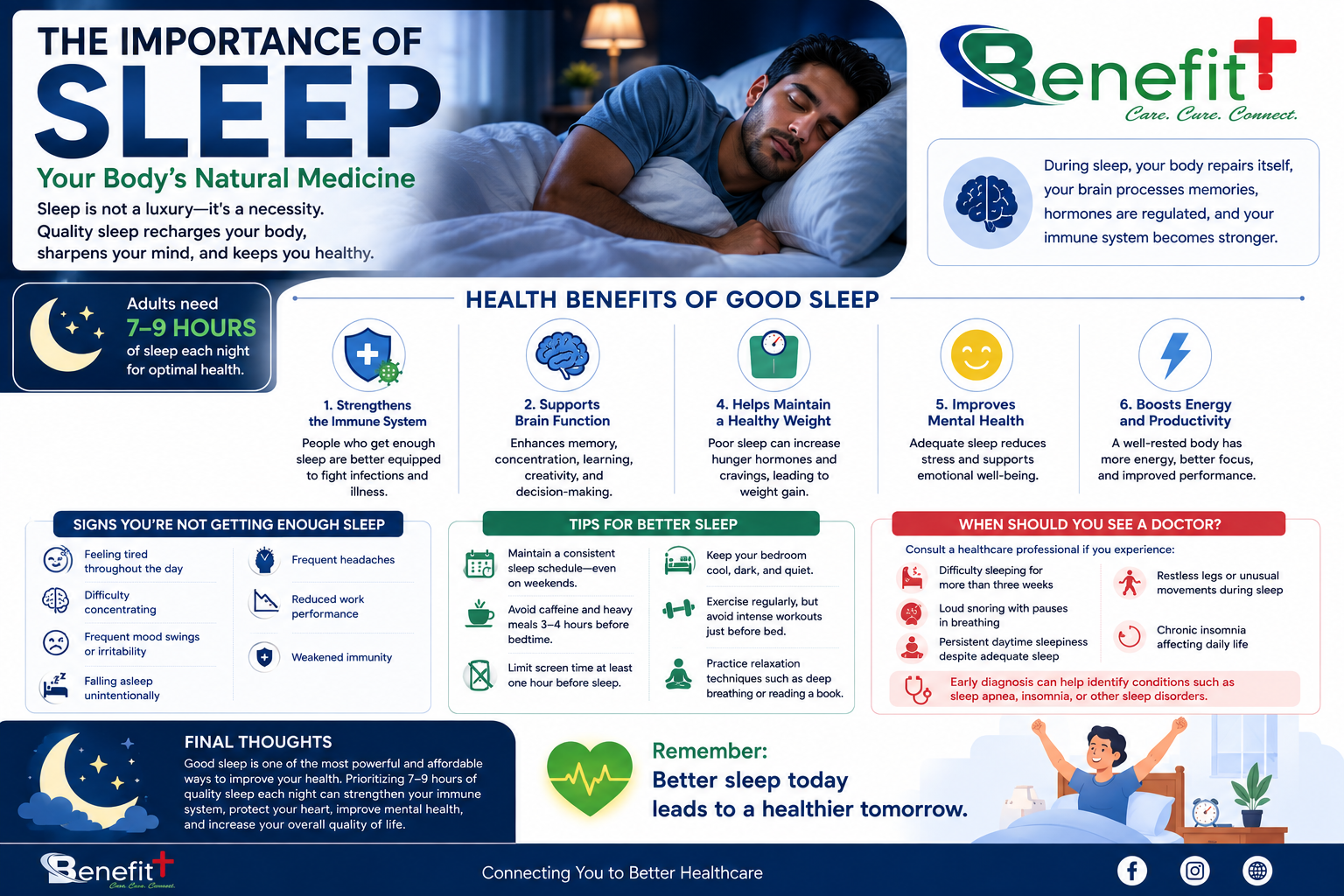
The Importance of Sleep: Your Body's Natural Medicine
Sleep is not a luxury—it's a necessity. Just as your body needs healthy food, water, and exercise, it also needs quality sleep to function properly. Yet millions of people sacrifice sleep because of work, stress, or excessive screen time, often without realizing the long-term effects on their health.
Why Sleep Matters
During sleep, your body performs essential repair and maintenance. Your brain processes memories, your muscles recover, hormones are regulated, and your immune system becomes stronger. Adults generally need 7–9 hours of sleep each night for optimal health.
Health Benefits of Good Sleep
1. Strengthens the Immune System
People who get enough sleep are better equipped to fight infections such as colds, flu, and other illnesses.
2. Supports Heart Health
Healthy sleep helps regulate blood pressure, heart rate, and inflammation, reducing the risk of heart disease and stroke.
3. Improves Brain Function
Quality sleep enhances concentration, memory, learning ability, creativity, and decision-making.
4. Helps Maintain a Healthy Weight
Poor sleep can increase hunger hormones, making you crave sugary and high-calorie foods, which may contribute to weight gain.
5. Improves Mental Health
Adequate sleep reduces stress and supports emotional well-being. Chronic sleep deprivation is linked to anxiety and depression.
6. Boosts Energy and Productivity
A well-rested body has more energy, better focus, and improved performance at work, school, and daily activities.
Signs You're Not Getting Enough Sleep
-
Feeling tired throughout the day
-
Difficulty concentrating
-
Frequent mood swings or irritability
-
Falling asleep unintentionally
-
Frequent headaches
-
Reduced work performance
-
Weakened immunity
Tips for Better Sleep
-
Maintain a consistent sleep schedule—even on weekends.
-
Avoid caffeine and heavy meals 3–4 hours before bedtime.
-
Limit screen time at least one hour before sleep.
-
Keep your bedroom cool, dark, and quiet.
-
Exercise regularly, but avoid intense workouts just before bed.
-
Practice relaxation techniques such as deep breathing or reading a book.
When Should You See a Doctor?
Consult a healthcare professional if you experience:
-
Difficulty sleeping for more than three weeks
-
Loud snoring with pauses in breathing
-
Persistent daytime sleepiness despite adequate sleep
-
Restless legs or unusual movements during sleep
-
Chronic insomnia affecting daily life
Early diagnosis can help identify conditions such as sleep apnea, insomnia, or other sleep disorders.
Final Thoughts
Good sleep is one of the most powerful and affordable ways to improve your health. Prioritizing 7–9 hours of quality sleep each night can strengthen your immune system, protect your heart, improve mental health, and increase your overall quality of life.
Remember: Better sleep today leads to a healthier tomorrow.
Benefit+ | Connecting You to Better Healthcare 🌙💙
-