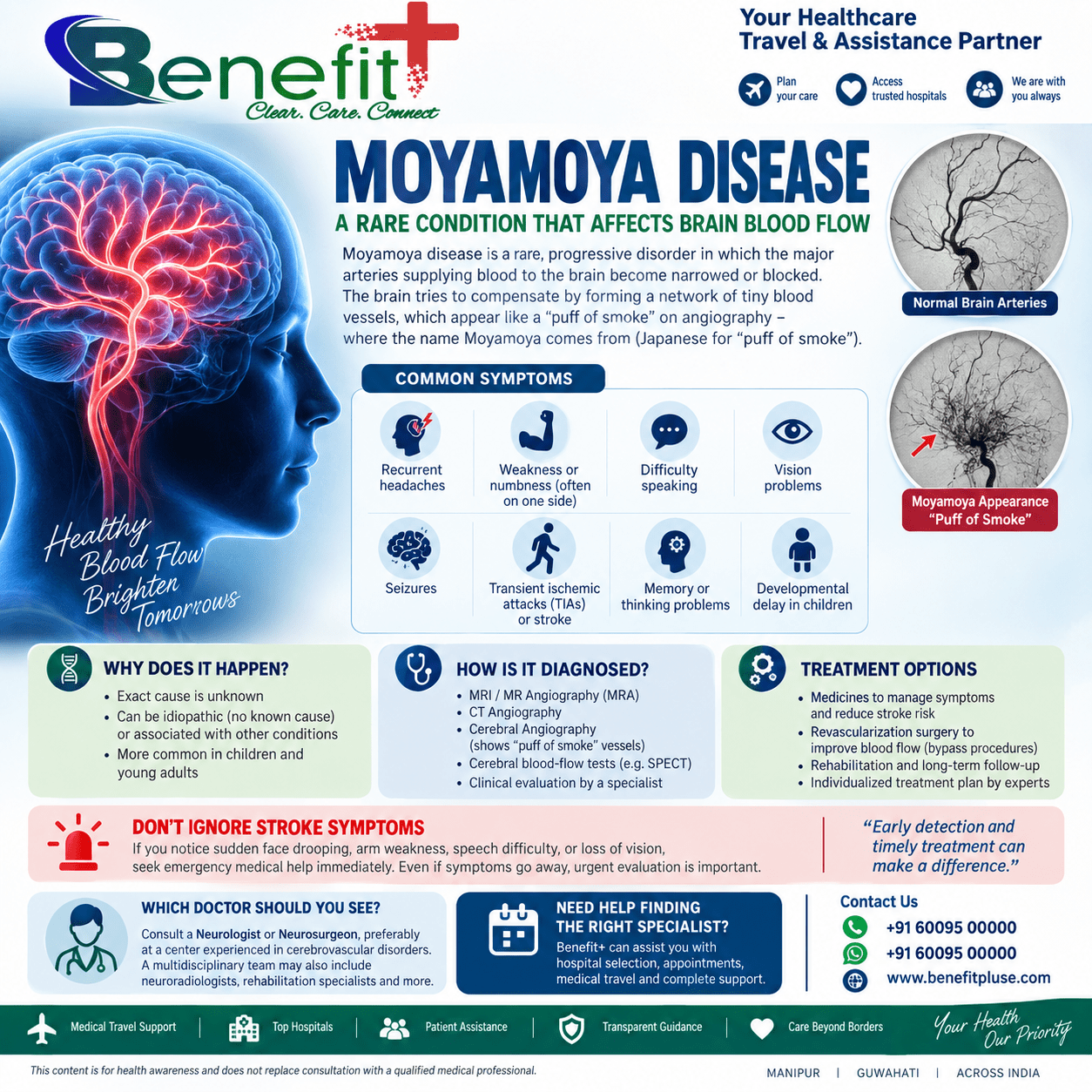
🧠 MOYAMOYA DISEASE: A RARE CONDITION THAT CAN AFFECT BRAIN BLOOD FLOW
🧠 MOYAMOYA DISEASE: A RARE CONDITION THAT CAN AFFECT BRAIN BLOOD FLOW
What is Moyamoya Disease?
Moyamoya disease is a rare, progressive disorder of the blood vessels supplying the brain. The arteries inside the skull can become narrowed or blocked, reducing blood flow to the brain.
As the brain tries to compensate, a network of tiny blood vessels develops around the blockage. On cerebral angiography, these vessels can look like a “puff of smoke” — which is where the Japanese name Moyamoya comes from.
⚠️ Common Symptoms
Symptoms can vary from person to person and may include:
• Recurrent headaches
• Temporary weakness or numbness, especially on one side
• Difficulty speaking or understanding speech
• Vision problems
• Seizures
• Recurrent transient ischemic attacks (TIAs)
• Stroke
• Involuntary movements
• Problems with memory, thinking or development in some patients
Symptoms can sometimes be triggered by activities that increase breathing or reduce carbon dioxide levels, such as strenuous exercise, crying, coughing, straining or fever.
🔍 How is Moyamoya Diagnosed?
A specialist may recommend investigations such as:
MRI / MR Angiography (MRA)
Helps evaluate the brain and blood vessels.
CT / CT Angiography
Can provide detailed information about the brain and blood vessels.
Cerebral Angiography
Provides detailed images of the blood vessels and can demonstrate the characteristic “puff of smoke” collateral vessels.
Cerebral Blood-Flow Testing
Perfusion MRI, SPECT or other specialized tests may be used to assess how well blood is reaching the brain.
🏥 Treatment
Treatment is individualized according to the patient's symptoms, blood flow and risk of stroke.
Doctors may use medicines to manage certain symptoms and reduce stroke risk. For patients with significant symptoms or impaired blood flow, revascularization surgery may be considered to improve blood supply to the brain. Surgical approaches can include direct bypass, indirect procedures such as EDAS, or a combination of techniques.
👨⚕️ Which Specialist Should You See?
Evaluation may involve a Neurologist and Neurosurgeon, often together with neuroradiology and rehabilitation specialists. Because Moyamoya is uncommon and complex, assessment at a center experienced with cerebrovascular disorders can be important.
🚨 Don't Ignore Stroke Symptoms
If someone suddenly develops:
F — Face: One side of the face droops
A — Arms: One arm becomes weak or numb
S — Speech: Speech becomes unclear or unusual
T — Time: Seek emergency medical help immediately
Even if the symptoms disappear, urgent medical assessment is important because they may represent a TIA or stroke.
💙 Early recognition can make a difference. Don't ignore unexplained neurological symptoms.
Benefit+
Healthcare Travel & Assistance Partner
📌 This content is for health awareness and does not replace consultation with a qualified medical professional.